
Manual requirements under the Machinery Regulation
What the new Machinery Regulation expects from your user manual — and how to secure CE marking without creating unnecessarily complex documentation.
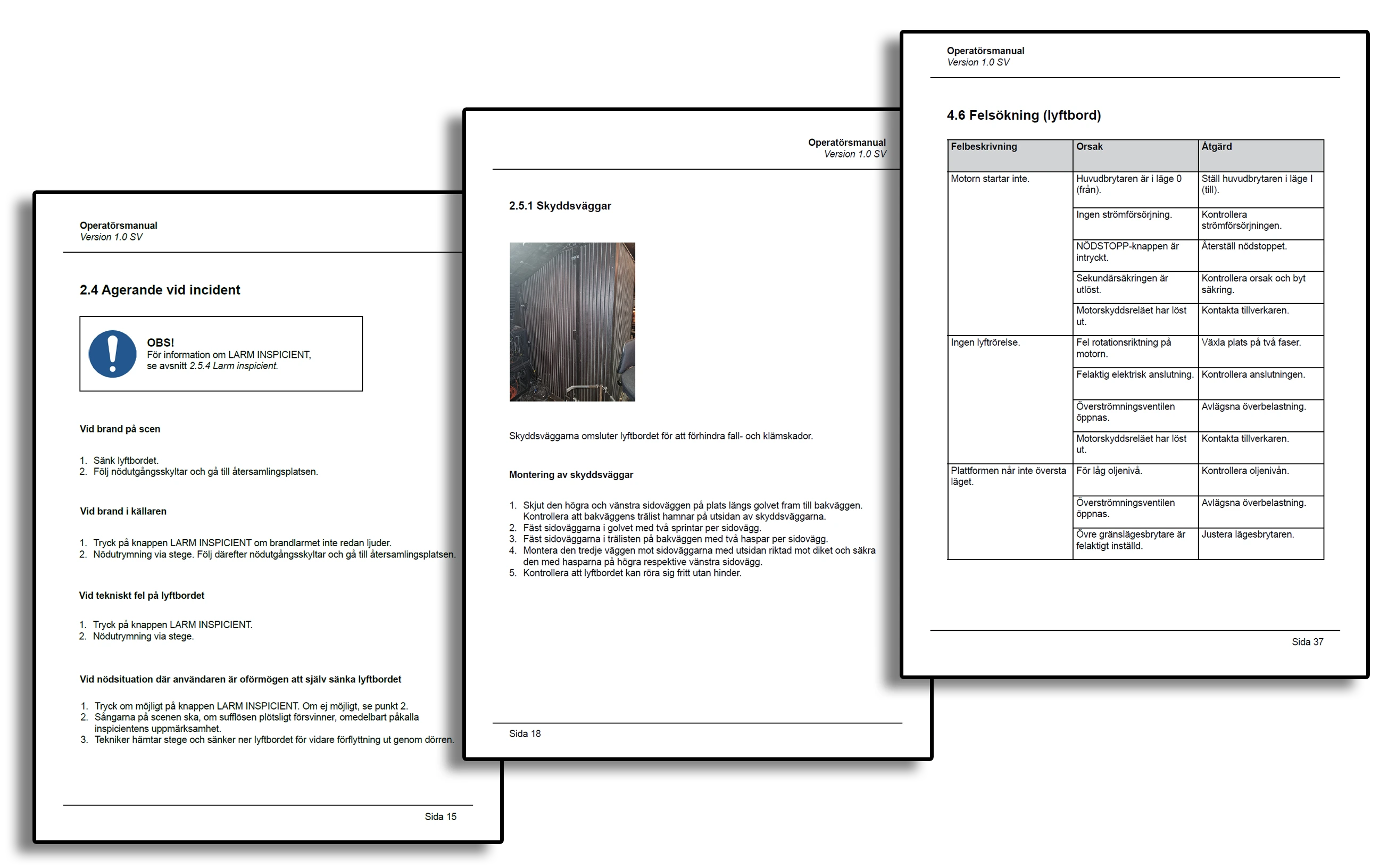
The new Machinery Regulation (EU) 2023/1230 tightens expectations for how machinery is documented. For many companies, the user manual is the weakest link in CE compliance — not because expertise is missing, but because the information is scattered, outdated, or written for engineers instead of users.
Why the manual matters
A machine is never safer than its documentation. The manual should:
- make residual risks understandable
- provide clear instructions for safe use
- support maintenance, troubleshooting, and correct operation over time
If the documentation falls short, the risk of misuse and support issues rises — and in the worst case, CE marking can be challenged.
What to review first
Start with a structured review of your existing material:
- Risk assessment — does every residual risk have a matching warning or instruction?
- Audience — is the language right for operators, maintenance staff, or installers?
- Structure — can users find the right information quickly, even under pressure?
- Illustrations — do visuals explain what words alone cannot?
From compliance to user value
“Meeting the requirements” is rarely enough. A strong manual:
- reduces cognitive load
- uses consistent terminology
- can be updated as the machine evolves
- reflects your visual identity and strengthens the product experience
That is the difference between a documentation obligation and a tool that protects both the user and your brand.
Next step
If you are unsure whether your current manual would hold up to review, a focused evaluation is often the most cost-effective first step. You get a clear view of the gaps against the Machinery Regulation — and which improvements deliver the most impact first.